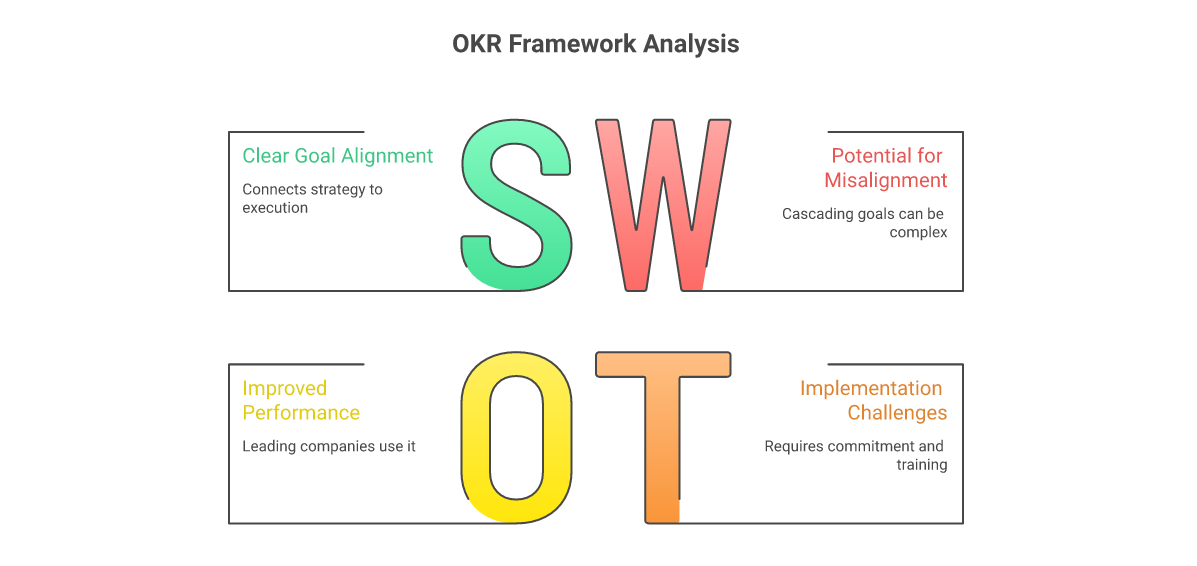
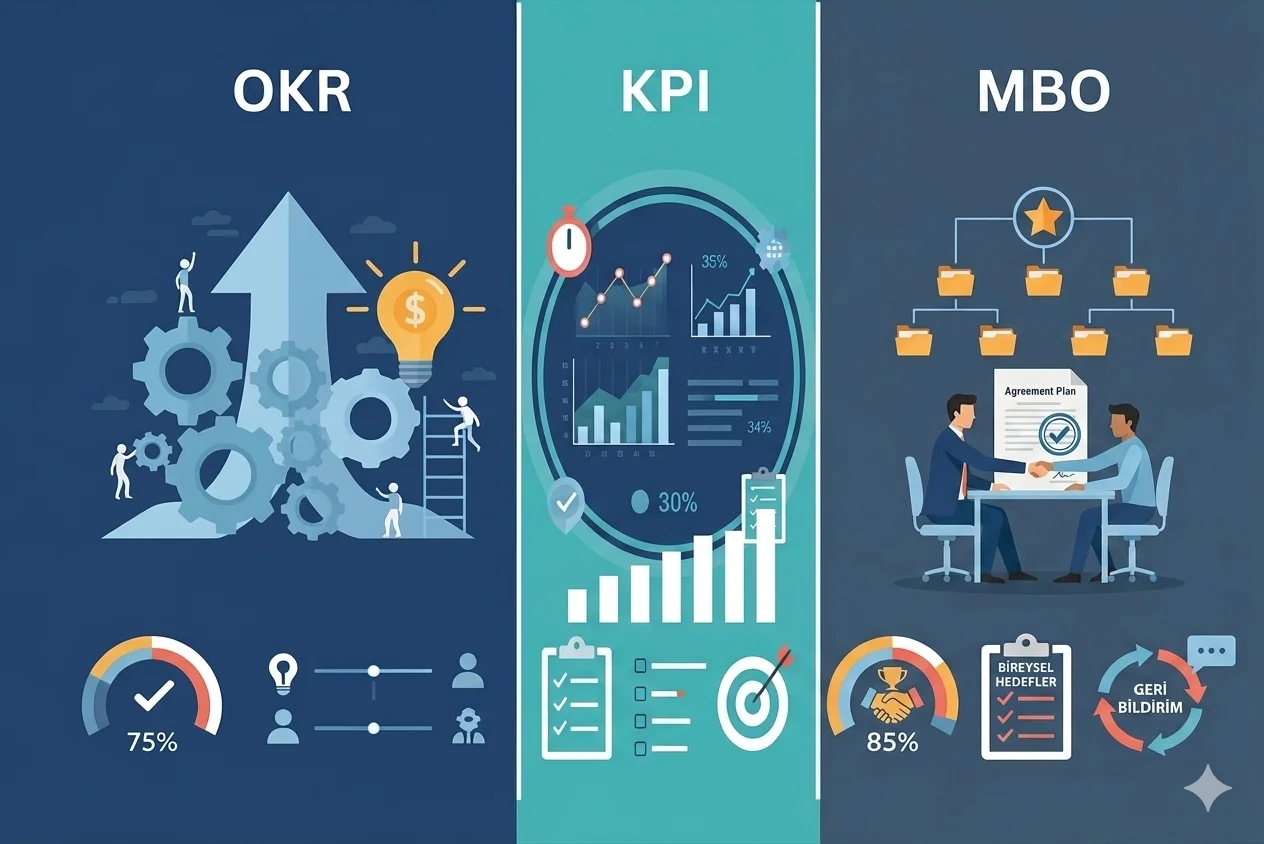
Answer 5 short questions about your metric and get a clear OKR or KPI classification with reasoning.
Answer 5 short questions about intent, target, time horizon, strategic linkage, and ambition. Each answer is weighted toward OKR or KPI.
Every classification surfaces the reasons behind it, so you can defend the call in a planning meeting or capture it in your team docs.
Some metrics live on a dashboard year-round and become Key Results during a specific cycle. The tool surfaces these hybrid cases explicitly.
A 'Hybrid' result means you should keep tracking the metric as a KPI year-round, and when you target a strategic step change in a specific cycle, lift that same metric into a Key Result for that cycle. In practice: the metric stays on your dashboard as a KPI, and during OKR planning you ask 'how much will we move this in this quarter?'. When the quarter ends, the Key Result closes and KPI tracking continues.
Yes, hybrid use is common. A metric you continuously monitor as a KPI, such as customer churn rate, can be lifted into a Key Result when you target a strategic step change in a specific cycle. Once that cycle ends, the metric continues to live as a KPI on the dashboard.
The tool asks five questions about your metric: intent, specific target, time horizon, strategic linkage, and ambition level. Each answer adds weight to either OKR or KPI. The total point gap drives an OKR, KPI, or hybrid classification. No AI is involved, just a consistent rule set.
You lose focus. Promoting every KPI to a Key Result forces metrics that need continuous monitoring into a quarter-bound review cycle. The result: there is not enough attention left for OKRs that require real strategic step change, and the team ends up trying to push everything forward at once.
DevOKR keeps your OKRs and KPIs aligned, scored, and visible to every team in real time.