What is OKR? OKR Meaning and Definition

 OKR-BOK™ Certified Coach
OKR stands for Objectives and Key Results: one ambitious, qualitative goal paired with two to five measurable outcomes that define what reaching it looks like. Andy Grove built the system at Intel in the 1970s; John Doerr brought it to a 40-person Google in 1999. Today it is the goal-setting language behind some of the fastest-scaling organizations in the world.
What is OKR and Why Does it Matter?
OKR's philosophy departs from traditional goal-setting methods. It creates clear alignment between company strategy and individual goals, with transparency and measurability as its core principles.
OKR is not just a list of targets but a significant tool for cultural change. It starts from the organization's highest vision and defines what everyone must focus on, down to the lowest unit, then measures the results of that focus systematically.
If you don't know where you are going, you might not get there.
— Yogi Berra
This quote shows how important OKR's philosophy of focusing on the goal is. Companies have many tools to achieve strategic goals, from system infrastructures to skilled employees, but all of them must come together in harmony toward common goals. It is highly important for everyone in the organization to know and embrace the goals at every level. Everyone must be aware of their responsibilities and these responsibilities must align with company goals and strategies. This approach is at the core of the OKR methodology.
This method enables organizations to identify their most important focus points and priorities. It clarifies expectations and supports everyone working within the framework of common goals. OKR acts as a guide in the constantly changing business world and a vital tool for staying agile.
History and Core Philosophy of OKR
OKR's roots date back to the MBO (Management by Objectives) approach developed by Peter Drucker in the 1950s, in which managers and employees determined goals together. Management by Objectives was generally followed in a yearly, rigid structure and focused mostly on performance appraisal.
OKR was developed to address the shortcomings of this approach and was implemented by Intel's CEO, Andrew S. Grove, in the 1970s. Grove made the system more agile and transparent, also building it upon challenging goals.
The methodology became popular with John Doerr, who left Intel. Doerr introduced this system to Google, a small startup, in 1999 and predicted that OKR would support Google in becoming a giant technology company. OKR became a powerful management tool and Doerr summarized its philosophy with a single acronym: FACT.
Core Principles of the OKR Approach
OKR is based on four main principles:
- Focus: It is necessary to focus on the 3 to 5 most critical goals within the period. Setting too many goals makes it difficult to identify priorities and focus, and focusing on what is important will be replaced by a to-do list.
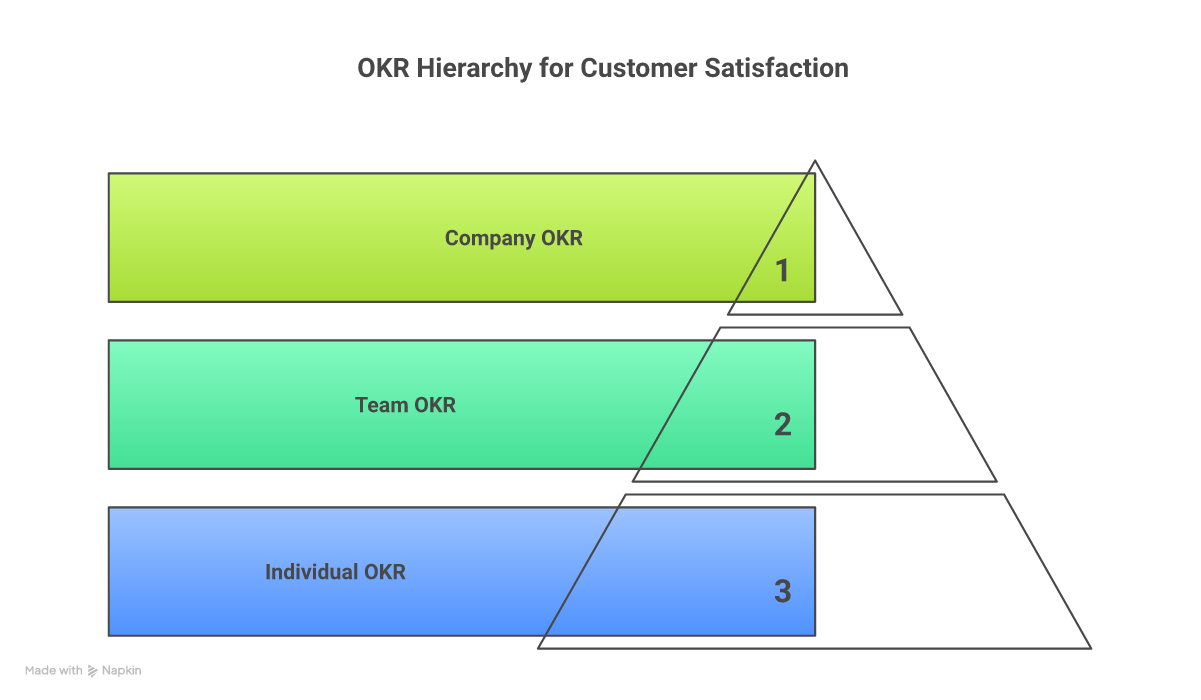
- Alignment: Individual goals must align with team goals. All goals are connected vertically and horizontally with the company's strategic priorities.
- Commitment: This refers to the organizational buy-in and ownership of the goals, including the commitment to regular tracking and action. In the context of Committed OKRs, it means a high-certainty pledge to achieve the goal (usually 100% success is expected).
- Transparency: This requires that OKRs be open and visible to everyone in the organization, from the CEO down. This openness clarifies who is responsible for what, improves accountability, and fosters greater collaboration.
The Structure of OKR: Objectives and Key Results
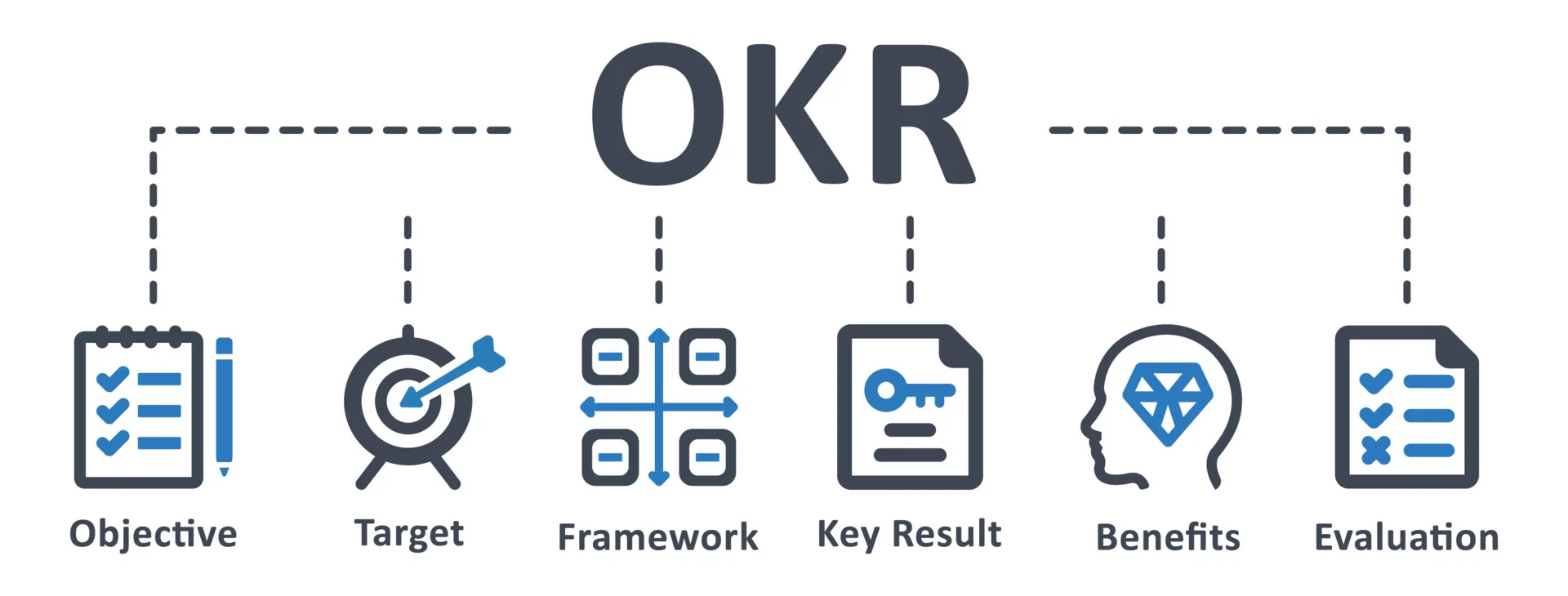
OKR consists of two main components. These are the Objective and the Key Results (KR).
Objectives
Objectives are high-level aims that the organization wants to achieve.
- They provide a qualitative answer to the question, "What do we want to achieve?".
- Characteristics:
- They must be inspiring and motivate employees.
- They must be short and memorable.
- They are generally limited to a quarterly period.
"Strengthen Industry Reputation by Taking Marketing Processes to Digital Leadership."
"Increase website traffic." This is more suitable for a Key Result.
Key Results (KR)
Key Results are specific, measurable outcomes that show whether the objective has been reached. They ensure the goal turns into concrete progress tracking.
- They provide a quantitative answer to the question, "How do we measure reaching the goal?".
- Characteristics:
- They must include a number, percentage, or score. They must be quantitative and measurable.
- They must be at a challenging level.
- They should measure the result created by the activity, rather than the work done.
KR is a metric that shows progress. The task is the action taken to reach this metric.
| Component | Focus Point | Example |
|---|---|---|
| Objective | Maximize Customer Satisfaction | |
| Key Result (KR) | Increase Net Promoter Score to 70 from 50. | (Measurement) |
| Task | Design and launch the new FAQ page. | (Action) |
Key Results are like the keys that unlock the objective. It is recommended to set 3 to 5 Key Results for each Objective.
Types of OKRs: Committed and Aspirational Goals
The OKR methodology divides goals into different categories.
Committed OKRs
These are goals that the company commits to achieving 100% with existing resources by the end of the period, representing the company's core operational success. Failure to reach them indicates a planning problem.
Aspirational OKRs
These are more ambitious goals than committed ones. They encourage employees to push their limits, support innovative thinking, and prepare the company for the future. An achievement level between 60% and 70% is acceptable, and reaching 100% might mean the goal was set too easily.
Learning OKRs
These goals are important for new ventures and used in projects with high uncertainty. The aim is to gather knowledge, experience, and insight rather than achieve a concrete result. For example: "Understand the market's reaction to the first version of the mobile application."
The OKR Cycle and Workflow
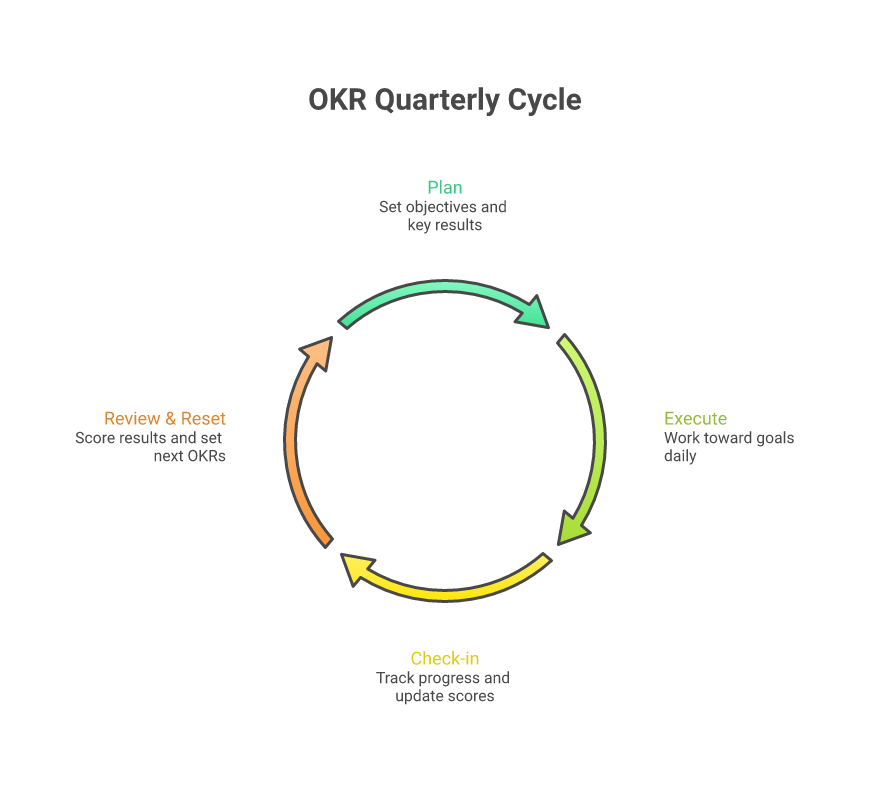
OKR is generally implemented in quarterly periods, providing agility to the organization. Annual strategic OKRs are divided into tactical goals during these periods.
Strategic Planning
The first step is setting the annual high-level goals. Derived from the company's vision and mission, they become the compass that guides the entire company.
Goal Setting and Alignment
The determined company OKRs show what is being targeted. Department and team OKRs are created in line with these targets, which also guide individual goals.
- Top-Down Guidance: Company management determines strategic goals.
- Bottom-Up Participation: Teams decide how they will contribute to the higher goals and propose a portion of their own OKRs.
This process increases employee participation and develops a sense of ownership. All OKRs must be aligned with the company's top goals.
Monitoring and Weekly Controls
The success of OKR depends on regular follow-up through weekly control meetings. During these meetings, progress is evaluated, the question "Which actions were taken?" is asked, and risks that make reaching the goals difficult are discussed. OKRs can be revised according to conditions, since OKR is a live guide, not a rigid plan.
End of Period Review
Scoring is done based on the Key Results at the end of the period, and a score between 0.0 and 1.0 is given for each key result. For example, 0.7 success.
Scoring should focus on learning, not on judging performance. The reason for a high or low score is investigated, and lessons are drawn for the next period. Failures must be discussed transparently, and this increases the organization's adaptation capability. The OKR score should not be linked to salary or bonus calculation. This prevents the setting of challenging goals.
OKR and Organizational Future
OKR is an important management language for the modern business world, and organizations of every sector and scale can adopt it. It increases efficiency and innovation, turns visions into concrete steps, and strengthens cooperation between teams. Most importantly, it ensures focus on the most critical issues.
OKR is not just a goal-setting tool. It supports a culture based on agility, transparency, and high performance. Successful OKR implementation depends on the right tools, the commitment of top management, and employee ownership.
OKR shows organizations where they are, allows them to clearly see where they want to go, and measures success on this challenging journey. Organizations maintain their focus and advance into the future through continuous learning and improvement.
Frequently Asked Questions
What is OKR?
OKR (Objectives and Key Results) is a goal-setting framework that defines what an organization wants to achieve and how success will be measured. Developed by Andy Grove at Intel, it has driven growth at companies like Google, Spotify, and LinkedIn by aligning teams around ambitious, transparent goals.
How many OKRs should you have?
The rule of thumb: 3-5 Objectives per level, 2-4 Key Results each. Less is more — too many OKRs signal lack of focus and dilute meaningful progress. Google's internal standard is 3-4 Key Results per Objective. If everything is a priority, nothing is.
How often should OKRs be reviewed?
OKRs are typically set quarterly. Weekly check-in meetings (CFR — Conversations, Feedback, Recognition) track progress and surface blockers early. A focused 15-minute weekly sync outperforms a lengthy monthly review.
Should OKR scores be tied to compensation?
No. John Doerr and virtually every OKR practitioner advise against it. When pay depends on scores, teams sandbag — they set safe, easy targets. OKRs work best when failure is allowed and ambition is rewarded separately from performance reviews.
Can small companies use OKR?
Yes. OKR scales from 10-person startups to Fortune 500 enterprises. For small teams it is especially powerful: with limited resources, clear focus is not optional — it is survival. Even a simple 3-Objective quarterly plan can transform execution speed.
Start Using DevOKR Today, Free
Turn what you've read into action. Write your first OKR in minutes, free for small teams.