OKR Coach: What They Do, When to Hire, and What Results to Expect

 OKR-BOK™ Certified Coach
An OKR coach does something no software platform or internal manager can: hold the methodology accountable when the organization wants to abandon it. They shape how goals are set, sustain the CFR rhythm through resistance, and prevent the gradual drift that turns a genuine alignment system into a quarterly form-filling ritual.
OKR may initially seem simple and clear. However, if the correct methodology is not followed, its implementation and integration into the company culture can become a complex process. OKR coaches guide companies on this journey. They ensure the effective adoption of this philosophy, thus playing a key role in helping companies achieve their goals.

Setting Realistic and Ambitious Goals
Teams new to OKR tend to fail in one of two predictable ways. They either set goals so safe that hitting 1.0 means nothing, or so unrealistic that the team gives up by week three. An experienced OKR coach calibrates this balance. They challenge the team to articulate what would genuinely move the needle, then pressure-test whether the proposed Key Results actually measure that outcome rather than activity. The coach forces the distinction between "what we will do" (output) and "what we will achieve" (outcome). The result is fewer Key Results, sharper measurement, and a quarter where the team finishes knowing exactly what they accomplished and why it mattered.
Providing an Objective Perspective
Internal teams develop blind spots. The product manager assumes the engineering team understands the strategic priority. The engineering manager assumes leadership has approved the trade-off. Nobody asks the uncomfortable question because everyone has a relationship to protect. An OKR coach has no such relationship. They sit outside the org chart, which means they can ask why this Key Result was chosen, why that team is taking on five objectives instead of three, or why a critical dependency was assumed rather than confirmed. This outside perspective is not optional decoration. It is the mechanism that surfaces the assumptions a team has stopped questioning.
CFA: Coaching, Feedback, and Acknowledgement Framework
CFA is a continuous management approach used in the OKR methodology. It stands for Coaching, Feedback, and Acknowledgement. It supports employees and teams in achieving their OKR goals while also ensuring their development.
Coaching
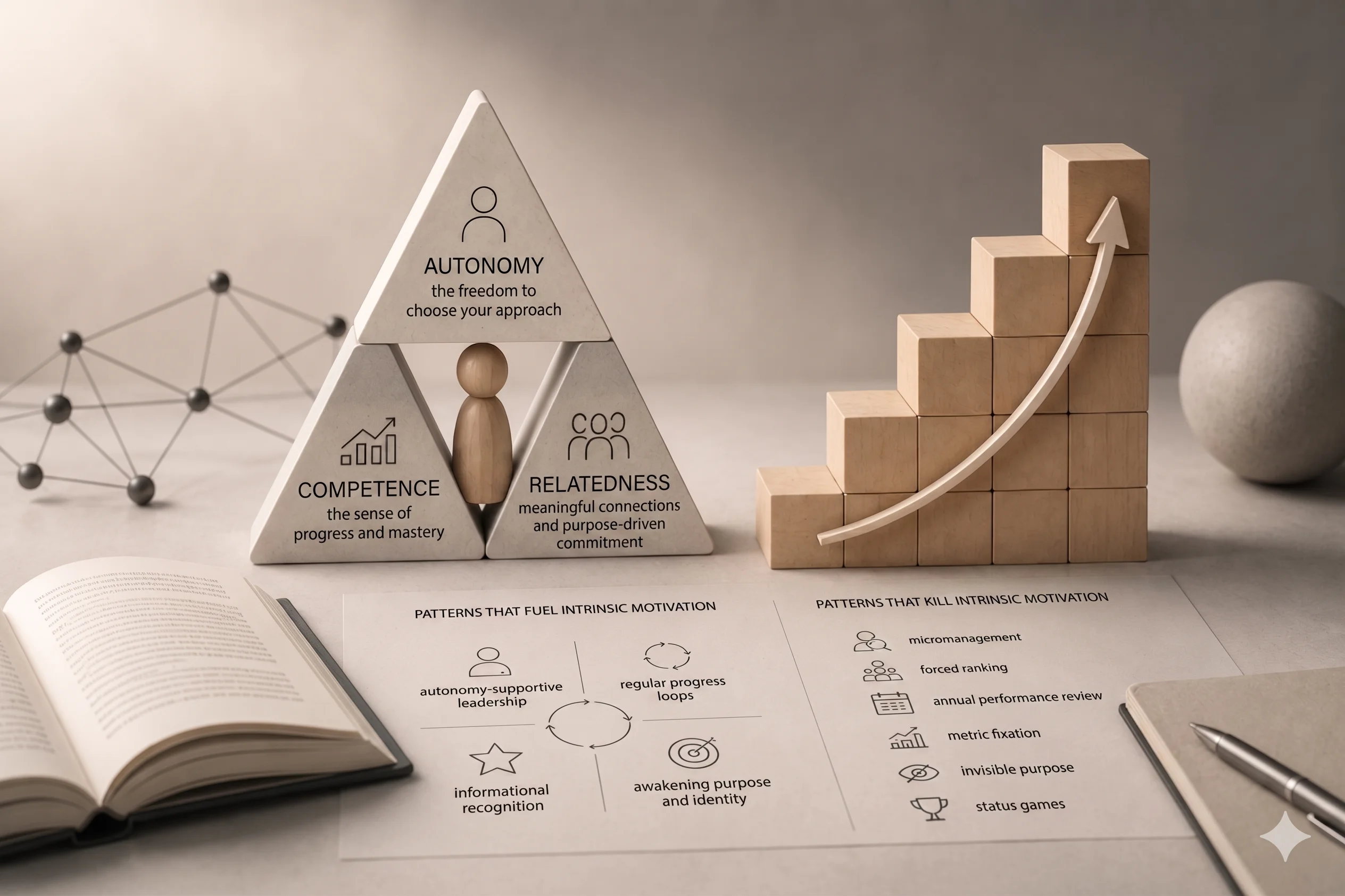
Coaching focuses on improving performance and potential and does not involve direct instruction. Coaches help employees find their own solutions, providing support to increase their competencies and overcome challenges. This approach facilitates the creation of a roadmap during the OKR goal-setting process and boosts the employee's motivation and sense of ownership.
Feedback
Feedback is the timely and objective evaluation of performance and behavior. The evaluation must be constructive. Feedback covers both strengths and areas needing development. Regular monitoring of OKRs involves providing frequent information. This helps employees see their blind spots and enables them to rapidly adjust their strategies in case of goal deviations.
Appreciation
Appreciation is the recognition of employees' efforts and successes. It refers to the process of rewarding their valuable contributions to the organization. This includes financial rewards and verbal/written praise. Recognizing small steps on the way to achieving OKRs is important. Acknowledging completed critical tasks raises employee morale and commitment. Regularly celebrating successes strengthens the OKR culture and encourages high performance.
OKR is not just a goal management tool; it is also a powerful cultural transformation movement. It is based on transparency, accountability, and continuous feedback. The OKR Coach manages this change, using all elements of the CFA framework. They install leadership through Coaching (C), ensure standards of transparency with Feedback (F), and reinforce new behaviors through Acknowledgement (A). This approach aligns companies, sharpens focus, and makes success sustainable. It gathers all teams around a common vision.
Instilling a Sense of Belonging and Motivation
The OKR coach involves not just senior management but every employee in the process. This participation ensures employees internalize the goals. They feel like an integral part of the company and become motivated. The coach sets up systems for transparent visibility of progress and efforts, thereby reinforcing the Culture of Appreciation. They strengthen communication by regularly recognizing successes and contributions. This fosters an organizational culture that supports collaboration, both within and across teams, and joint success.
Process Monitoring and Maintaining Focus
In agile teams, the intensity of daily work increases the risk of deviation. The OKR coach monitors the process with regular check-ins. They provide critical Feedback that keeps the team focused on the main objectives. This practice maintains discipline. It ensures teams adhere to strategic priorities within agile dynamics. The coach provides data-driven guidance using progress metrics.
Ensuring Proper Alignment
The OKR coach ensures goals are in perfect alignment. Individual, team, and department goals are matched with the company's core objectives. The coach guides teams to perform this alignment, guaranteeing that resources are directed correctly and effectively. This prevents resource wastage and creates a holistic synergy on the path to achieving the company's strategic vision.
Protection from Common Mistakes
The OKR coach has experience with the most common mistakes. These include unmeasurable key results, misaligned objectives, or setting too many OKRs. The coach detects these issues early. They provide corrective feedback to the teams, taking preventative measures in advance. This ensures teams are correctly guided.
Contribution to Individual Development
The OKR coach assumes a key role. They support not only corporate development but also the individual development of employees. They offer personalized coaching covering performance measurement and effective goal management, which lifts individual competencies and strengthens employees' commitment to the company's vision.
Frequently Asked Questions
What does an OKR coach do?
An OKR coach serves as the process guardian that neither technology tools nor internal managers can fully replace. When organizational resistance rises and teams want to abandon the discipline, the coach maintains methodological integrity. They guide how goals are structured, keep the feedback rhythm alive through difficult periods, and build lasting capability within the organization.
When should a company hire an OKR coach?
Companies newly introduced to OKR should bring in a coach when they struggle to define the right Objectives and aligned Key Results. A coach becomes critical when OKR has turned into a quarterly form-filling ritual, when cross-department alignment is failing, or when the organization needs a genuine culture transformation toward transparency and continuous feedback.
What is the difference between an OKR coach and an OKR consultant?
A consultant typically designs a solution, implements it, and leaves. A coach helps the organization find its own solutions and walks the journey together. OKR coaching focuses on building employee ownership and capability rather than providing direct instructions. Coaching is better suited for long-term culture change; consulting for short-term implementation.
How long does OKR coaching typically last?
The duration varies based on the company's maturity level and goals. At minimum, at least one full OKR cycle — one quarter — is needed. For lasting culture transformation, 2-4 quarters is more realistic: the first quarter focuses on setup and habit formation, subsequent quarters on reinforcement and optimization of the system.
What results can you expect from OKR coaching?
A good OKR coach enables measurable and aligned goal-setting, transparent communication and a continuous feedback culture across teams, increased employee engagement, and stronger focus on strategic priorities. Through the CFA framework — Coaching, Feedback, and Acknowledgement — a high-performance culture becomes sustainable rather than dependent on individual motivation cycles.