Best OKR Software Comparison 2026

The OKR software market has grown fast, and picking the wrong tool usually means months of wasted effort before your team quietly stops logging in. We looked at nine platforms that keep showing up in shortlists, broke down what each one actually does well, and mapped out who gets the most value from each.
DevOKR: Full-Cycle OKR + Performance Platform
Strategy maps, competency tracking, check-ins, and certified OKR coaching included with every setup.
DevOKR combines OKR management with strategy execution, cascading alignment, and continuous feedback in a single platform. OKRs cascade from company to team to individual level, each with configurable weight percentages so leaders see exactly how much each team's work contributes to a strategic objective. Strategy maps provide a visual layer on top, linking high-level vision to every OKR in the tree.
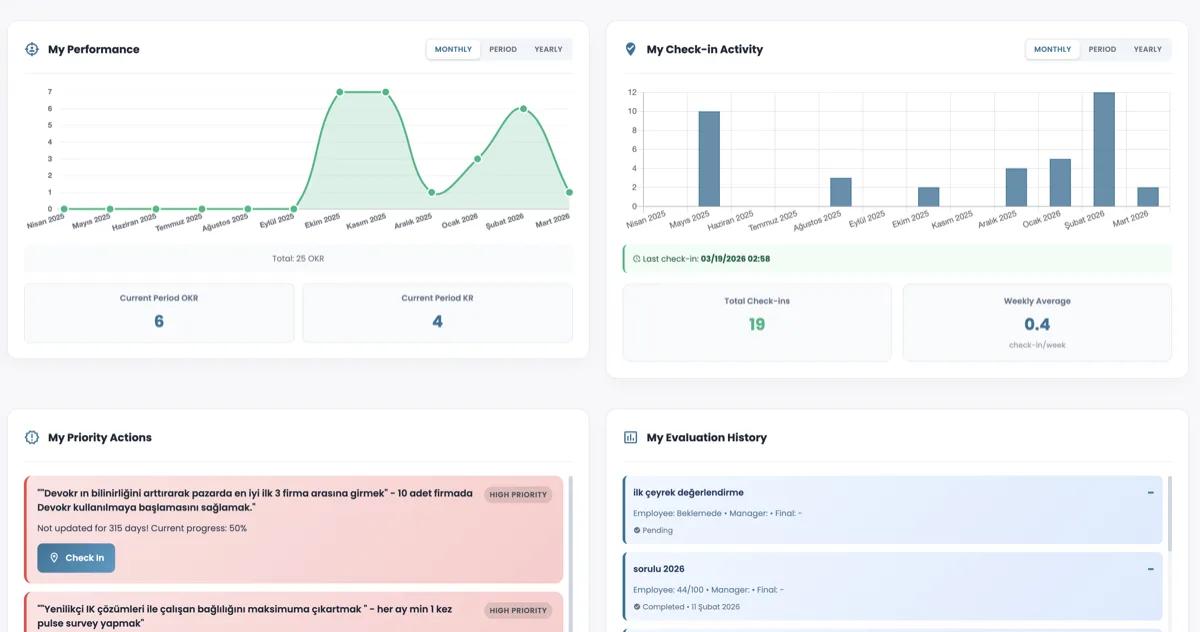
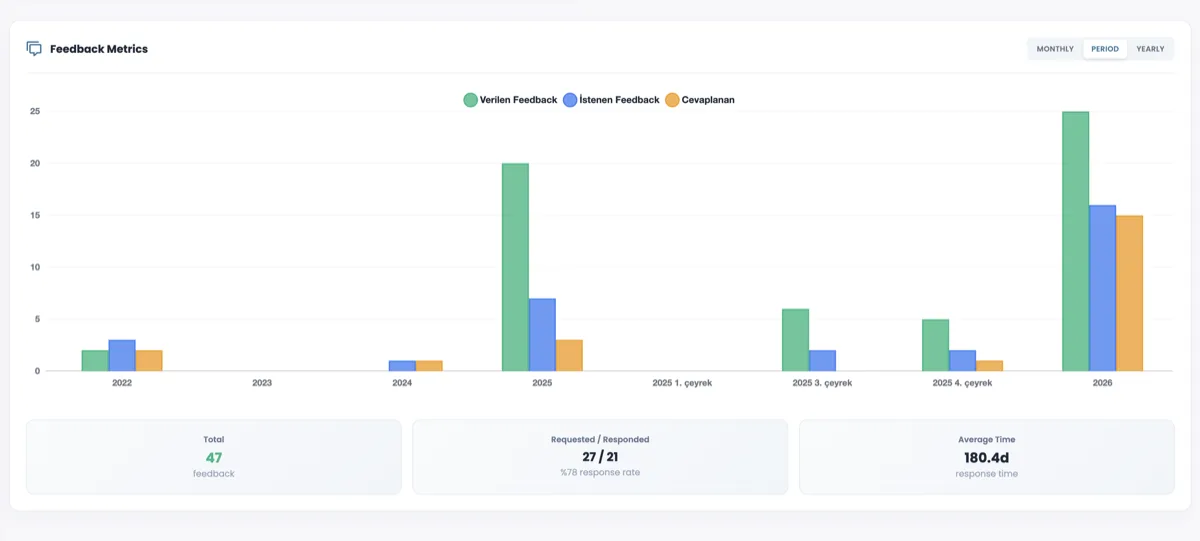
The platform's AI engine helps teams get started faster: the AI OKR Generator analyzes your strategic context and suggests ready-to-use Objectives and Key Results, while the AI OKR Analysis evaluates existing goals against SMART criteria and flags gaps. The bigger differentiator is coaching. Every plan comes with a certified OKR coach who works alongside your team during setup, helps write the first round of OKRs, and stays involved through check-in cycles. Built-in check-in workflows and progress reports keep things moving between quarters.
- Cascading OKR alignment with configurable weight percentages across company, team, and individual levels
- Strategy maps connecting company vision to weighted OKRs, with competency tracking and structured 360° feedback
- Certified OKR coaching and personalized onboarding included with every subscription
- Structured check-in workflows, meeting management, and automated progress reports
- AI OKR Generator and AI OKR Analysis for automated goal creation and SMART criteria evaluation
- 25+ integrations including Slack, Microsoft Teams, Jira, Google Workspace, and Outlook
Best for: Teams that need weighted OKR alignment and strategy maps but don't want to figure out the methodology alone. The built-in coaching makes it a strong fit for first-time OKR adopters.
Things to Consider: DevOKR's integration catalog (25+) is smaller than some competitors offering 150+. The platform is strongest in Turkish and English; teams needing other languages should check availability. As a newer player compared to established enterprise tools, the customer community and third-party ecosystem are still growing.
Profit.co: AI-Powered Strategy Execution
AI-powered platform combining OKR, Balanced Scorecard, and performance management under one roof.
Profit.co bundles OKRs with Balanced Scorecard methodology and continuous performance management. The workflow follows a clear rhythm: quarterly planning and alignment, weekly check-ins with real-time tracking, and 360° feedback to close the loop on engagement.
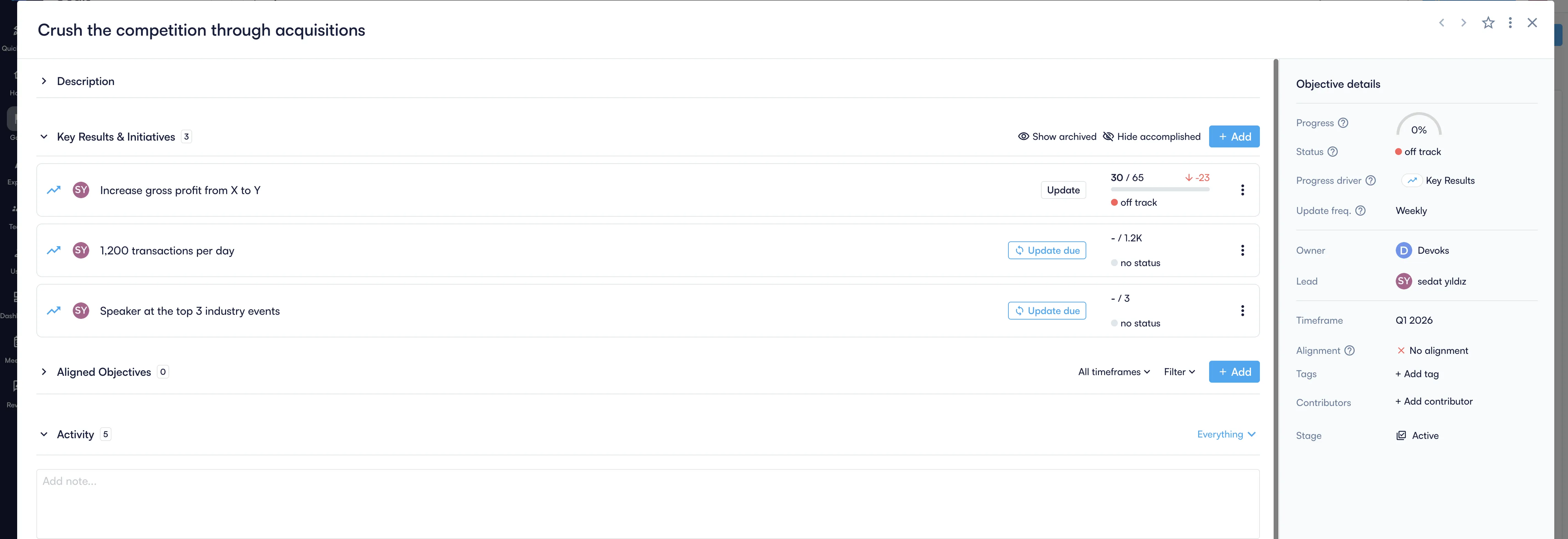
Built-in OKR coaching and round-the-clock support lower the barrier for teams new to OKRs. The 150+ integration catalog covers most of the usual suspects: Slack, Teams, Jira, Salesforce, HubSpot.
- Cascading OKRs from organizational to individual levels with visual alignment maps
- Built-in task management, project tracking, and Balanced Scorecard support
- 150+ integrations including Slack, Teams, Jira, Salesforce, and HubSpot
- Dedicated OKR coaching and 24/7 customer support
Best for: Mid-to-large companies that want OKR tracking, performance reviews, and strategy execution in one place, with coaching support baked in.
Things to Consider: The interface can feel complex at first, especially for smaller teams. Advanced features like alignment views and custom reports require extra learning time. Notification volume can be high, so plan for adequate onboarding before full rollout.
Quantive: AI-Driven Strategy Execution
AI-powered strategy engine with deep analytics that turns planning into a continuous process.
Quantive (formerly Gtmhub and WorkBoard) positions itself as a strategy execution engine rather than just an OKR tracker. The platform leans heavily on analytics: predictive insights, scenario planning, and dashboards built for executive consumption. The pitch is turning strategy from a quarterly ritual into something that runs continuously.
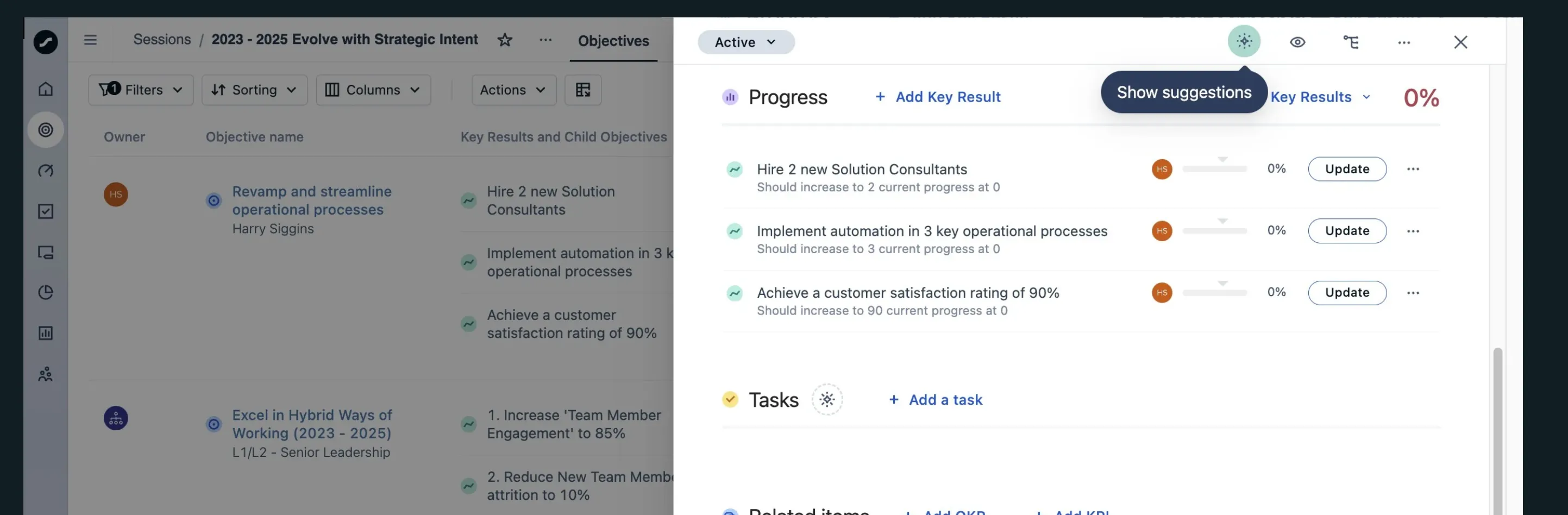
150+ integrations pull data automatically so progress updates aren't manual, and AI coaching agents nudge teams when goals drift off course.
- AI-powered coaching agents for real-time nudges and strategy guidance
- 150+ native integrations for automated data-driven OKR tracking
- Predictive insights, scenario planning, and cross-departmental alignment
- Enterprise-grade dashboards with executive-ready strategy overviews
Best for: Large, data-heavy organizations where leadership wants to see how OKR progress ties back to business metrics in real time.
Things to Consider: Pricing runs high, particularly at enterprise scale. The interface has some navigation inconsistencies across different views. Advanced analytics features require technical comfort, so non-technical users may need extra support during setup.
Lattice: People-Centric Performance + OKR
HR tool that brings performance reviews, engagement surveys, and OKRs into one platform.
Lattice started as a performance review tool and expanded into OKRs, which shows in the product: goals live inside a broader ecosystem of reviews, feedback, engagement surveys, and 1:1s. Individual OKRs cascade up to team and company goals through a visual alignment view.
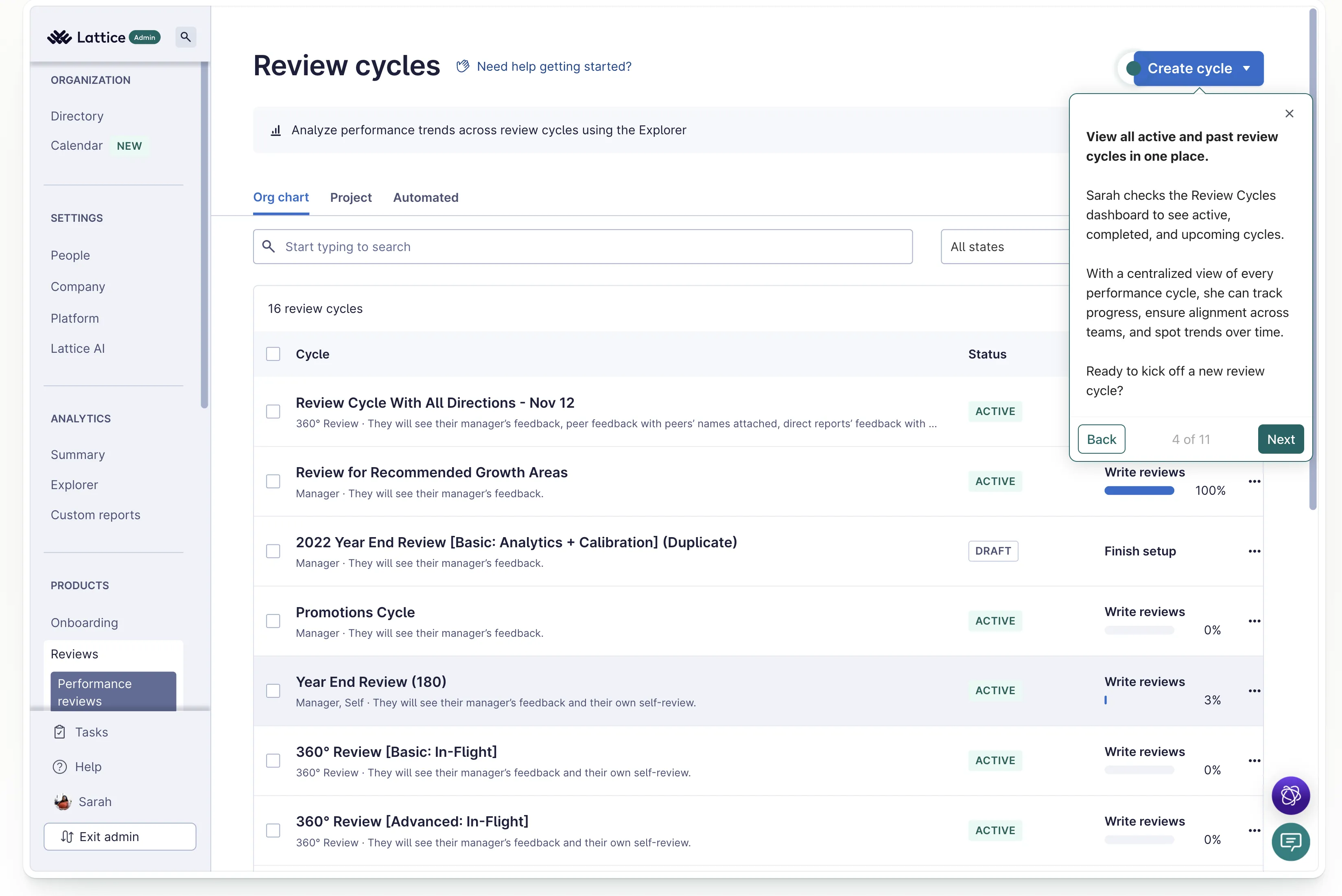
AI features handle the tedious parts: Writing Assist drafts review text, and performance summaries save managers hours during review season. Lattice has since grown into a full HRIS, adding payroll and succession planning to the mix.
- Cascading OKR alignment integrated with performance reviews and engagement surveys
- AI Agent for automated HR workflows and routine task handling
- Built-in 1:1 meeting tools, real-time feedback, and peer recognition
- Full HRIS capabilities including payroll and succession planning
Best for: HR departments already running performance reviews and engagement surveys that want to add OKRs without adopting a separate tool.
Things to Consider: The Goals module can feel clunky compared to the rest of the platform. Creating and tracking OKRs requires more clicks than expected. Customization options for templates and dashboards are limited. The add-on pricing model means costs can climb quickly once you bundle multiple modules.
Betterworks: Enterprise Goal Alignment
Enterprise goal alignment and performance platform that scales from 500 to 100,000+ employees.
Betterworks targets large enterprises, from 500 to 100,000+ employees. It pairs OKR goal-setting with performance reviews, continuous feedback loops, and calibration workflows.
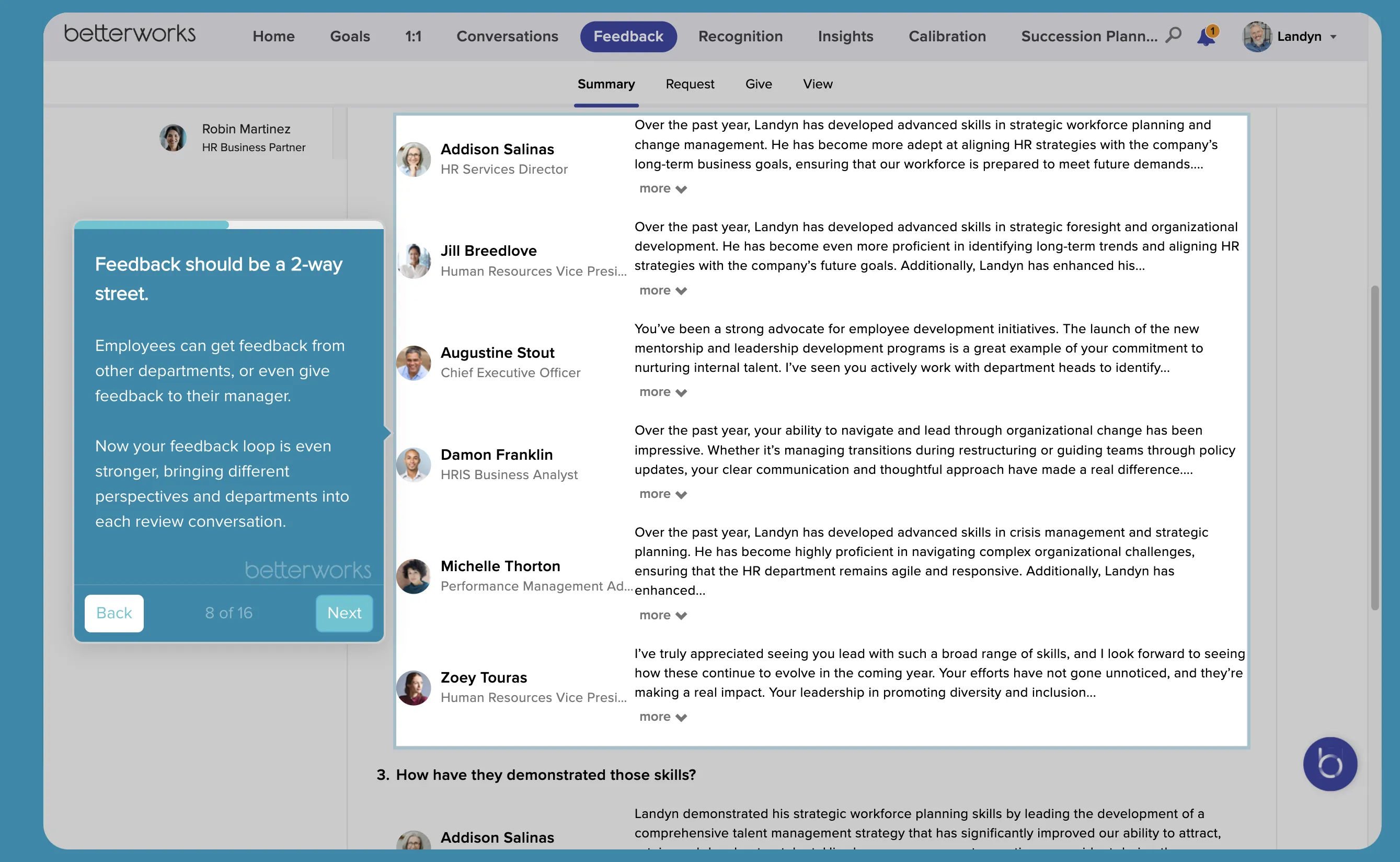
A recent ground-up rebuild (NextGen) shipped 400+ new features, including AI Assist that helps write goals, run check-ins, and flag biased language in reviews. The platform handles multi-level review orchestration, which matters when you have several layers of management signing off simultaneously.
- Company-to-individual OKR cascading with AI Goal Assist for contextual drafting
- NextGen platform with 400+ features and modern microservices architecture
- AI-assisted bias detection in performance reviews and calibration tools
- Deep integrations with Slack, Teams, Outlook, Gmail, Jira, and Salesforce
Best for: Enterprises with 500+ employees that run formal review cycles and need goal alignment to feed directly into calibration and compensation decisions.
Things to Consider: Built for enterprises, so the implementation process can be heavy and may require significant IT involvement. The sheer number of features takes time to get used to. If your company has fewer than 500 employees, this platform will likely feel like overkill.
Perdoo: OKR + KPI + Strategy Maps
Platform that combines OKR and KPI tracking with visual strategy maps, with a free tier to get started.
Perdoo's standout feature is how it connects OKRs and KPIs through visual Strategy Maps. You start with an Ultimate Goal at the top, define Strategic Pillars underneath, and then attach OKRs and KPIs to each pillar. The result: every employee can trace their work back to the company strategy on a single screen.
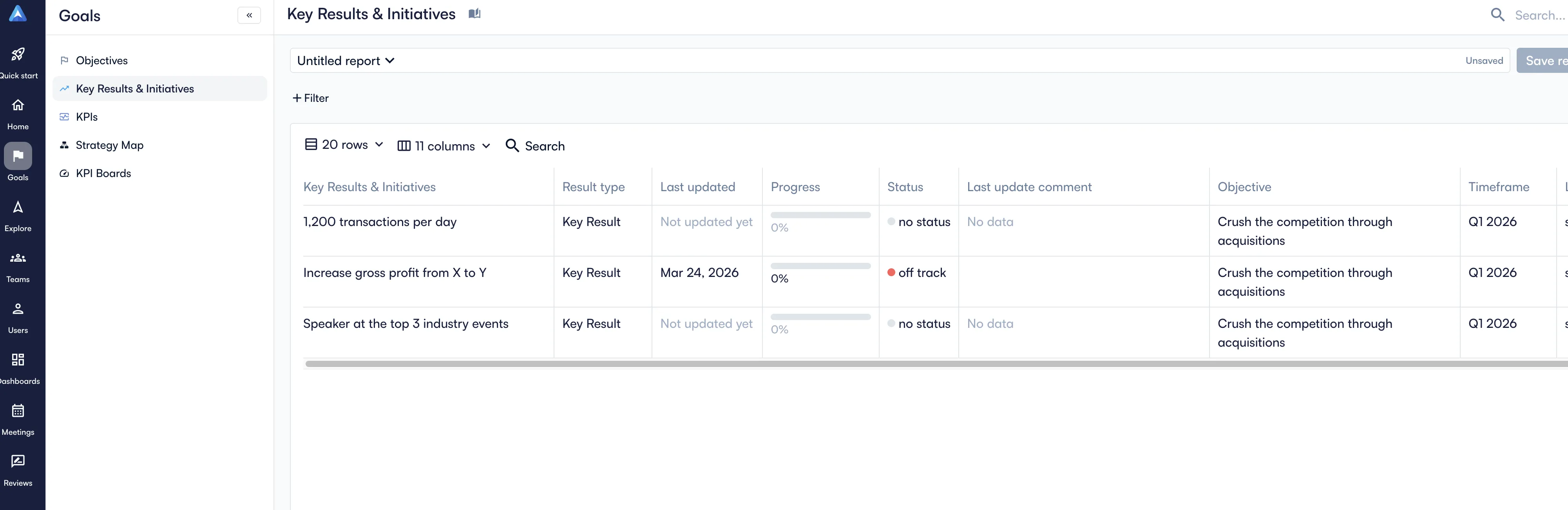
Beyond goal tracking, Perdoo offers check-ins, 1:1s, pulse surveys, kudos, and performance reviews. There's a free tier that includes the core features, which makes it a low-risk starting point for teams trying OKRs for the first time.
- Visual Strategy Maps linking Ultimate Goal to Strategic Pillars, OKRs, and KPIs
- Integrated KPI boards with month-on-month target tracking alongside OKRs
- Free tier including Strategy Maps, OKR/KPI tracking, check-ins, and integrations
- Pulse surveys, kudos, and 1:1 meeting tools for continuous engagement
Best for: Teams that track both OKRs and KPIs and want a clear visual map showing how they connect to company strategy.
Things to Consider: The mobile app feels limited compared to the desktop version. Native OKR cascading support is limited and may require manual setup. Dashboard customization options are restricted. The free tier is a great starting point, but cost-effectiveness should be assessed as your team scales.
Mooncamp: Modern OKR for Microsoft Teams
Modern OKR platform with the deepest Microsoft Teams integration on this list.
Mooncamp's main selling point is its Microsoft Teams integration, arguably the deepest on this list. You can view, create, and update OKRs without leaving Teams, and a built-in chatbot lets anyone check goal status with a quick command.
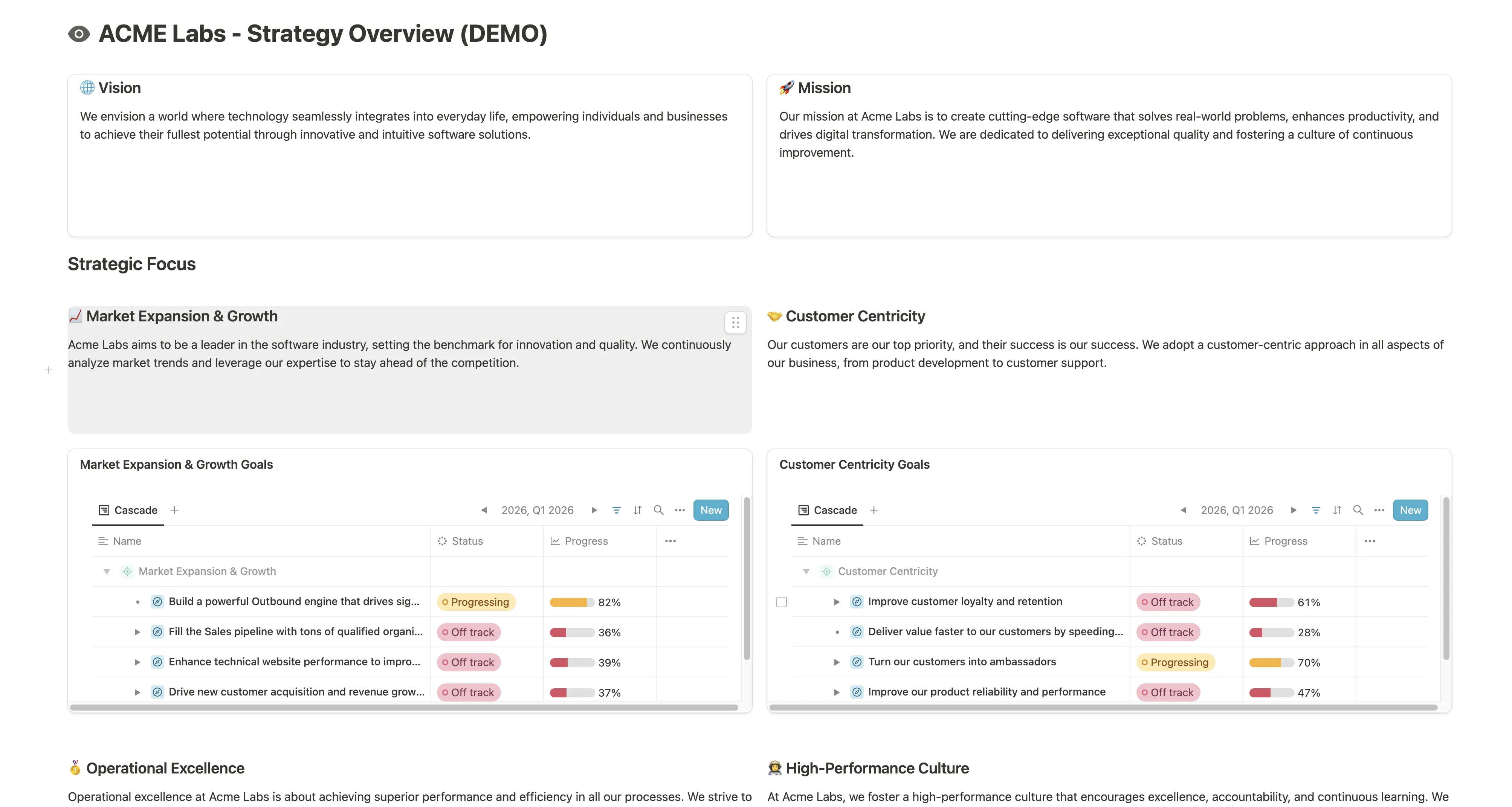
Automated check-in reminders through Slack or Teams help keep OKR data current, even across large rollouts. Each customer gets a dedicated Customer Success contact for onboarding and adoption support.
- Deep MS Teams integration: view, create, and update OKRs without leaving Teams
- Built-in chatbot for instant OKR status checks and updates via chat commands
- Automated check-in workflows with configurable cadences and smart reminders
- Personal onboarding and dedicated Customer Success support for enterprise rollouts
Best for: Companies that live in Microsoft Teams and want OKR tracking to happen there, not in yet another browser tab.
Things to Consider: Mooncamp uses a Progressive Web App rather than a native mobile app, so the mobile experience may not match the desktop version. Some features like due dates on actions and real-time auto-refresh are still in development. For organizations not centered on Microsoft Teams, the platform's added value may be lower.
Peoplebox: AI-First OKR + Talent Platform
Tool that brings OKR, performance, engagement, and AI-powered recruiting into a single platform.
Peoplebox started with OKRs but has expanded into a broader talent platform that includes AI recruiting, performance reviews, and engagement analytics. The Nova AI Recruiter module handles resume screening, runs structured interviews, and includes fraud detection.
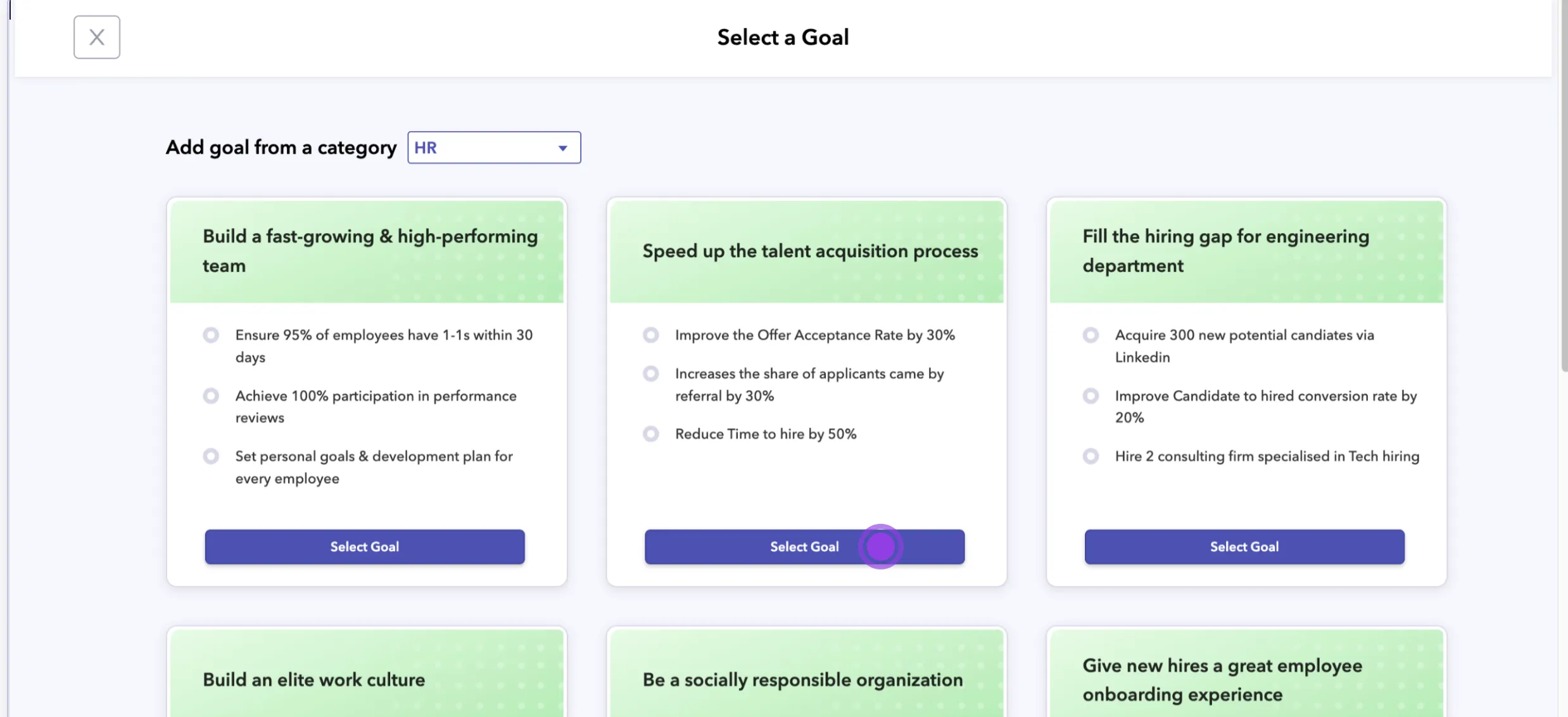
Predictive models flag flight risks and surface high-potential employees before review season. Weekly 1:1s, team OKRs, and continuous feedback all live in the same workflow. Automated nudges remind managers when check-ins or feedback are overdue.
- Nova AI Recruiter: automated resume screening, structured interviews, and bias removal
- Predictive analytics for flight risk, promotion readiness, and engagement trends
- Unified workflow combining OKRs, 1:1s, reviews, and real-time pulse surveys
- Automated manager nudges for feedback, check-ins, and review completion
Best for: HR teams that want one platform covering OKRs, recruiting, engagement, and performance, instead of stitching together four separate tools.
Things to Consider: The template structure can be rigid, making it harder to customize for different departments. There is no mobile app at this time. Third-party integrations are more limited compared to other platforms on this list. It is worth checking whether your workflows align with Peoplebox's standard approach before committing.
OKRsTool: Flat-Fee OKR Platform for Small Teams
Flat-fee OKR platform built for startups and small teams
OKRsTool targets startups and small businesses that want a lightweight, affordable OKR solution without per-user pricing. It positions itself as a simpler alternative to enterprise tools like Profit.co or Quantive, focusing on speed of setup and AI-assisted goal writing.
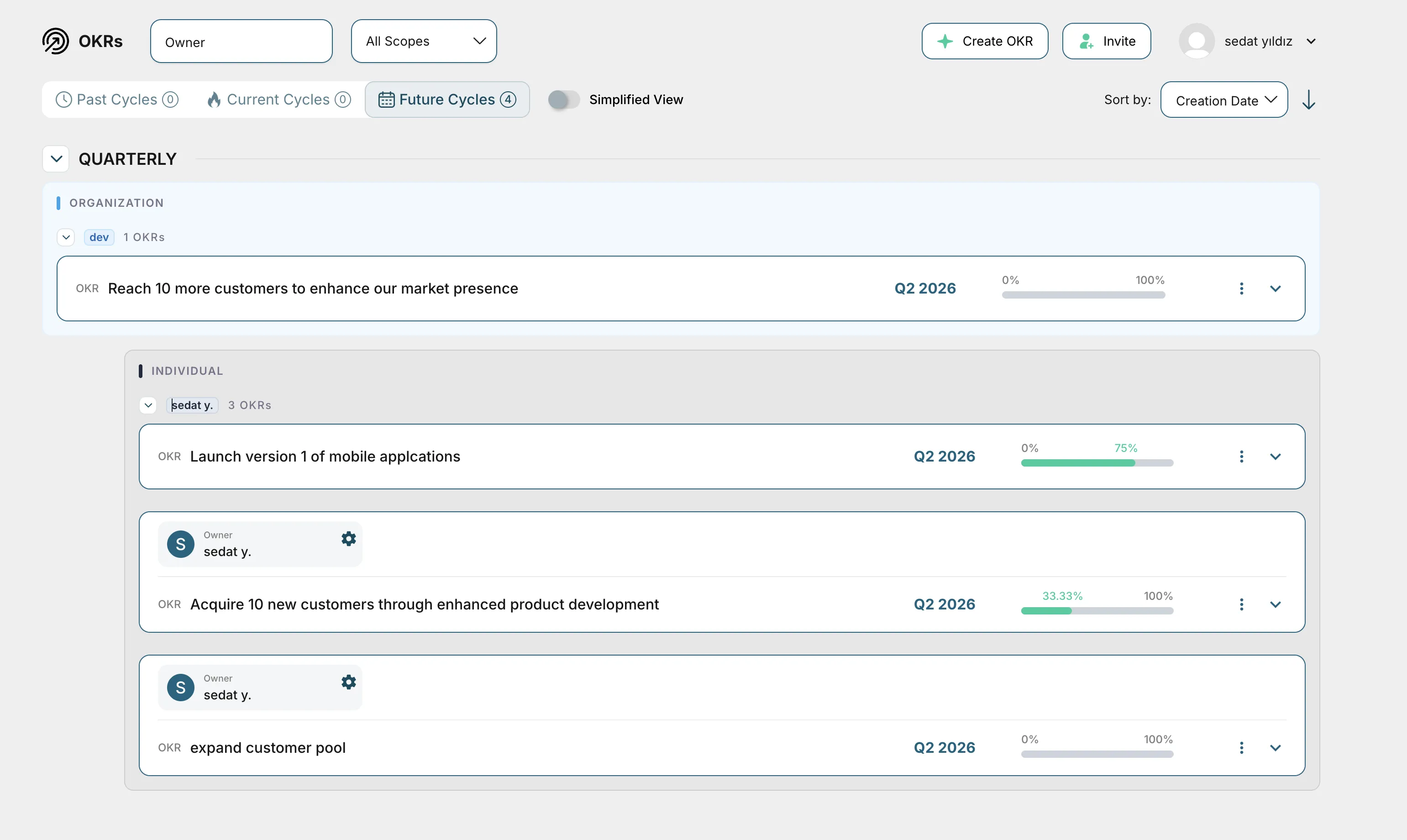
The platform includes AI-powered OKR drafting, weekly check-in reminders, and an interactive alignment map for visualizing goal hierarchies. Its flat-fee pricing model (regardless of user count) is its biggest differentiator in a market dominated by per-seat pricing.
- AI-assisted OKR writing and initiative recommendations
- Interactive alignment map with hierarchical OKR visualization
- Flat-fee pricing for unlimited users, no per-seat cost
- OKR-aligned performance reviews and weekly check-in reminders
Best for: Startups and small teams (5-25 people) looking for an affordable, easy-to-adopt OKR tool without per-user fees
Things to Consider: OKRsTool has limited integrations (Slack and MS Teams only on paid plans). Enterprise features like PDF export are not yet available. The free tier is restricted to 5 users and 1 active OKR cycle.
Feature Comparison Table
Here's how the nine platforms stack up on the features that matter most. Check marks show built-in support; dashes mean the feature isn't available or requires a third-party add-on.
| Feature | DevOKR | Profit.co | Quantive | Lattice | Betterworks | Perdoo | Mooncamp | Peoplebox | OKRsTool |
|---|---|---|---|---|---|---|---|---|---|
| OKR Management (Core) | ✓ | ✓ | ✓ | ✓ | ✓ | ✓ | ✓ | ✓ | ✓ |
| AI Features | ✓ | ✓ | ✓ | ✓ | ✓ | ✗ | ✓ | ✓ | ✓ |
| KPI / Metric Tracking | ✓ | ✓ | ✓ | ✓ | ✓ | ✓ | ✗ | ✓ | ✓ |
| Check-in & Progress | ✓ | ✓ | ✓ | ✓ | ✓ | ✓ | ✓ | ✓ | ✓ |
| Alignment & Cascade | ✓ | ✓ | ✓ | ✓ | ✓ | Limited | ✓ | ✓ | ✓ |
| Performance Reviews | ✓ | ✓ | Limited | ✓ | ✓ | ✓ | ✗ | ✓ | ✓ |
| Strategy Maps | ✓ | ✓ | ✗ | ✗ | ✗ | ✓ | ✓ | ✗ | ✗ |
| Integrations | 25+ | 150+ | 150+ | 50+ | 50+ | 50+ | 30+ | 50+ | 2 |
| Turkish Interface | ✓ | ✗ | ✗ | ✗ | ✗ | ✗ | ✗ | ✗ | ✗ |
| GDPR Compliance | ✓ | ✓ | ✓ | ✓ | ✓ | ✓ | ✓ | ✓ | ✓ |
| OKR Coaching & Onboarding | ✓ | ✓ | ✓ | ✓ | ✓ | ✓ | ✓ | ✓ | ✓ |
| Mobile App | ✗ | ✓ | ✓ | ✓ | ✓ | ✓ | ✗ | ✗ | ✗ |
| Reporting & Analytics | ✓ | ✓ | ✓ | ✓ | ✓ | ✓ | ✓ | ✓ | ✓ |
| Enterprise SSO / Security | ✓ | ✓ | ✓ | ✓ | ✓ | ✓ | ✓ | ✓ | ✓ |
How to Choose the Right OKR Software
First question: do you need a standalone OKR tracker, or should it come with performance reviews, engagement surveys, or strategy mapping? If your company hasn't done OKRs before, a platform with built-in coaching will save you months of trial and error.
Second, look at where your team already works. If everyone lives in Microsoft Teams, a native integration will get more people actually using the tool. And if onboarding support matters to you, pick a platform that includes it rather than charging extra or pointing you to a help center.
Third, be honest about scale. A team of 30 doesn't need enterprise cascading and calibration. Start with a free tier, prove the habit, and upgrade when the simple tool starts feeling limiting.
Quick Guide: Which OKR Tool Is Right for You?
There's no single "best" OKR tool. Each platform on this list solves a slightly different problem: some focus on pure goal tracking, others wrap OKRs into a full performance suite, and a few lean hard into AI or strategy visualization.
Your pick should come down to three things: what tools your team already uses daily, how experienced you are with OKRs, and whether you need just goal tracking or a broader performance management package alongside it.
Frequently Asked Questions
What is the best OKR software for small teams?
For small teams, Perdoo with its free tier or DevOKR with coaching support are strong options. The key is choosing a tool that matches your team size without unnecessary complexity and can be adopted quickly. Simple OKR tracking may suffice, performance review modules may not be needed initially.
Do I need dedicated OKR software, or is a spreadsheet enough?
Spreadsheets can work for teams of 5-10, but as organizations grow, alignment tracking, transparency, and check-in management become increasingly difficult. OKR software provides automated reminders, visual alignment maps, progress reports, and integrations that make the process far more efficient. For teams of 20+, dedicated software investment pays for itself quickly.
What features are essential in OKR software?
At minimum, you need goal creation and cascading, check-in workflows, progress tracking, and visual alignment maps. Beyond that, integrations with your existing tools (Slack, Teams, Jira), reporting dashboards, and mobile access are important. Platforms that include coaching support make a real difference for teams new to OKR.
Why does coaching support matter in OKR software?
OKR is a working discipline, not just software. Tools without the right habits are ineffective. Platforms that include certified coaching help teams build proper OKR writing, check-in discipline, and alignment processes from day one. This is why platforms like DevOKR and Profit.co include coaching support with every deployment.
How much does OKR software typically cost?
OKR software pricing varies significantly by platform and user count. Some platforms offer free starter tiers, while enterprise plans charge per user per month. Since prices change frequently, we recommend requesting quotes directly from platform websites for the most current information.
Can OKR software integrate with my existing tools?
Most modern OKR platforms offer integrations with Slack, Microsoft Teams, Jira, Salesforce, and other popular tools. All platforms in this comparison, including DevOKR, have at least basic integrations. For Teams-centric teams, Mooncamp stands out; for broad integration needs, Profit.co or Quantive lead the way.
Start Using DevOKR Today, Free
Turn what you've read into action. Write your first OKR in minutes, free for small teams.